
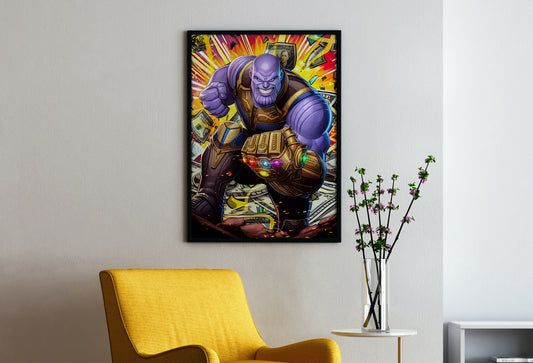

Something is fascinating about abstract canvas art. You walk past it, pause, look again, and somehow it pulls you in without showing a face, a landscape or a clear story. Abstract art doesn’t tell you what to see, it invites you to feel something. That’s what makes it one of the most popular choices in modern UK homes today.
In fact, a 2024 UK interiors survey found that 71% of homeowners prefer abstract art because it blends easily with any décor and instantly elevates a room without trying too hard. At Blanq Canvas, this is exactly why we create pieces that focus on expression, emotion and visual impact, the three qualities that make abstract art timeless.
But what actually sits beneath these expressive, bold, unpredictable artworks? Let’s break down the key elements of abstract canvas and how each one shapes what you feel when you see it.
The Key Elements of an Abstract Canvas
Abstract art may feel spontaneous, but every piece is built on artistic building blocks. These elements work together to create rhythm, emotion and harmony.
1. Colour: The Emotion Maker
Colour is usually the first thing your eye notices and the last thing you forget. In abstract art, colour does more than fill the canvas. It creates mood.
Think of colour as the artwork’s personality.
-
Warm shades add energy and comfort
-
Cool tones calm the space
-
Neutrals create balance
-
Bold hues make a statement
-
Pastels soften the atmosphere
Psychology has a strong influence on emotional response. This explains why a deep blue canvas feels grounding, while a fiery red stroke feels dramatic. At Blanq Canvas, colour is carefully chosen to bring life into UK interiors from soft minimalist homes to bold contemporary spaces.
2. Form and Shape: The Silent Storytellers
Abstract art often replaces real-world objects with shapes. These shapes guide the viewer’s eyes, create emotion and build structure.
Shapes can be:
-
Geometric and sharp
-
Soft and organic
-
Layered
-
Distorted
-
Circular and flowing
Even though abstract art doesn’t show a clear subject, these shapes create a sense of direction. A swirl can feel like movement. A block can feel like stability. A fragmented line can create tension. It’s storytelling without the figures.
3. Texture: Depth You Can Feel
Texture gives a canvas its richness. It adds character, dimension and physical presence.
Textures can appear as:
-
Thick paint layers
-
Smooth blended strokes
-
Grainy finishes
-
Raised accents
-
Soft brush textures
Texture brings the artwork to life, even from across the room. It’s especially powerful in minimalist or neutral homes where every detail counts. A textured abstract canvas can turn a plain wall into a centrepiece.
4. Composition: The Art of Balance
Composition is how the artist arranges everything on the canvas: the colours, shapes, strokes and textures.
A strong composition feels right even if it’s wild and unconventional.
It creates:
-
Flow
-
Balance
-
Focus
-
Depth
Think of composition as the “architecture” of the artwork. It makes sure nothing feels too heavy, empty or chaotic. Even if the strokes look spontaneous, a good composition makes them feel intentional.
5. Movement: The Pulse of the Artwork
Movement is what makes abstract art feel alive. It’s created through lines, curves, brushstrokes and repeated patterns.
Movement adds:
-
Rhythm
-
Energy
-
Emotion
-
Direction
A canvas with movement pulls you in. Your eyes travel across it. You feel the motion. That’s why movement is one of the most powerful and often overlooked elements of abstract art.
How These Elements Transform Your Home?
These elements don’t just shape the canvas, they shape your entire room. Visual art can increase a room’s perceived atmosphere by up to 30%, simply by influencing how people emotionally connect with the space.
Here’s how abstract canvases elevate interiors:
-
Colour sets the room’s mood
-
Texture adds luxury
-
Movement brings life
-
Composition gives balance
-
Shapes add personality
This is why abstract art works in every interior style, Scandinavian, industrial, minimalist, boho, or modern. It adapts instead of competing.
Explore styles perfect for UK homes:
How to Choose the Right Abstract Canvas?
1. Decide what you want the room to feel like
Calm? Bold? Warm? Fresh? Choose colours that match the mood.
2. Pick the right size
Large spaces need larger canvases. Smaller rooms look great with paired sets or soft-toned pieces.
3. Match the artwork to your décor energy, not your furniture
Abstract art blends best when it complements the atmosphere.
4. Hang the canvas at eye level?
Around 145–150cm from the floor is the standard used in UK galleries.
5. Choose something that speaks to you
Abstract art is emotional. The right piece should feel meaningful.
FAQs
1. What makes abstract canvases so popular?
Their ability to fit into any room and set a strong emotional tone.
2. Do abstract canvases suit classic homes?
Yes. They add a modern, refreshing contrast.
3. Is textured canvas worth it?
Absolutely. It adds depth and richness to your space.
Final Thoughts
The magic of an abstract canvas lies in the way colour, shape, texture, composition and movement blend together. These elements make the artwork expressive, impactful and incredibly versatile.That’s why homeowners across the UK choose abstract art to bring personality and emotion into their spaces.
At Blanq Canvas, every piece is created with intention designed to elevate your home and inspire emotion every time you walk past it.